Repair/Replace Gunwale Wood

CoorsCrusher

New member
Joined
Apr 15, 2024
Messages
12
Reaction score
1
C Dory Year
2006
C Dory Model
22 Cruiser
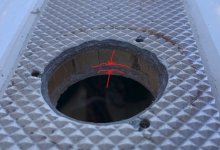
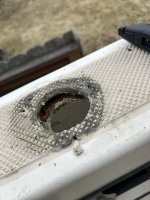
Hello all. Getting the boat ready for the summer and was replacing the rod holders the original owners had installed. There’s some pretty substantial waterlogging in the wood where they drilled through the gunwale to put the mount in. Wondering what the best way to repair would be? Scrape out all the waterlog rotted wood and then trying to figure out what to put in to replace. It’s sandwiched on both sides by fiberglass so placing new wood in would be difficult.
IMG_9848.jpeg
 
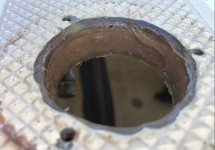
Dig out the rotted/wet wood. Fill the void with epoxy filler (either premixed or make your own). Clean up the opening after filling and reinstall the hardware. Use butyl tape under the hardware for sealing.
 
I had a similar issue on my boat where the core was not properly sealed and had some moisture damage around the rod holders as well as the freshwater fill fitting. The steps are as described by ssobol above, remove the old/rotten core as much as possible, dry the area, fill with thickened epoxy and re-install hardware with butyl tape.

Stepping back the core:
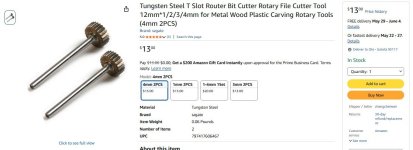
If it's not totally rotted, a dremel t-slot burr tool can be used to step back the wood while keeping the upper and lower glass intact. In your case it seems like you were able to pry out most of the damaged balsa.

Drying the area:
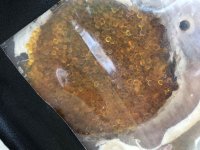
Drying the remaining core can be tricky. I have had some good luck here by taping off the bottom of the hole with some clear film, pouring in silica gel, and taping off the top with film. After a day or two, the beads will turn color as they absorb moisture. They can be easily sucked out with a shop-vac and the beads can be collected, dried in the microwave and re-used. They absorb something like 30% of their weight in water so it's a pretty good way to dry areas that are hard to reach. Repeat until the gel no longer turns color, meaning there is no more moisture to absorb.

Filling the gap:
Once it's reasonably dry, mix up some epoxy with filler (I like the west marine filleting blend but almost any filler will do) you want to get the consistency right between mayonnaise and peanut butter, just so it doesn't run out of your gap. To squeeze it into the gap, I like to put it into a little pastry type bag after mixing in a cup. I usually just use a ziploc bag with a small corner snipped off to stand in for the pastry (frosting) bag. A large syringe also works well but it's hard to get the thickened mixture loaded into the syringe. Try to avoid air bubbles when filling the void left by the rotten core. Use a popsicle stick to create a nice clean edge.

If you find that you have a very large void space, the epoxy can get very hot during cure, so make sure you use a slow hardener. For really large voids, you can also consider filling with two part expanding foam.

I would consider doing this for all of your fittings since I don't think CDory did a good job sealing core (at least on my boat)

Good luck with the repair!

 

Attachments

  • Stepped Back Core.jpg
    Stepped Back Core.jpg
    88.8 KB · Views: 5
  • Filled with Epoxy.jpg
    Filled with Epoxy.jpg
    133.2 KB · Views: 6
  • IMG_6101.jpeg
    IMG_6101.jpeg
    640.3 KB · Views: 6
  • Screenshot 2026-05-18 102046.jpg
    Screenshot 2026-05-18 102046.jpg
    63.7 KB · Views: 6
  • Screenshot 2026-05-18 102128.jpg
    Screenshot 2026-05-18 102128.jpg
    64.1 KB · Views: 5
I had a similar issue on my boat where the core was not properly sealed and had some moisture damage around the rod holders as well as the freshwater fill fitting. The steps are as described by ssobol above, remove the old/rotten core as much as possible, dry the area, fill with thickened epoxy and re-install hardware with butyl tape.

Stepping back the core:
If it's not totally rotted, a dremel t-slot burr tool can be used to step back the wood while keeping the upper and lower glass intact. In your case it seems like you were able to pry out most of the damaged balsa.

Drying the area:
Drying the remaining core can be tricky. I have had some good luck here by taping off the bottom of the hole with some clear film, pouring in silica gel, and taping off the top with film. After a day or two, the beads will turn color as they absorb moisture. They can be easily sucked out with a shop-vac and the beads can be collected, dried in the microwave and re-used. They absorb something like 30% of their weight in water so it's a pretty good way to dry areas that are hard to reach. Repeat until the gel no longer turns color, meaning there is no more moisture to absorb.

Filling the gap:
Once it's reasonably dry, mix up some epoxy with filler (I like the west marine filleting blend but almost any filler will do) you want to get the consistency right between mayonnaise and peanut butter, just so it doesn't run out of your gap. To squeeze it into the gap, I like to put it into a little pastry type bag after mixing in a cup. I usually just use a ziploc bag with a small corner snipped off to stand in for the pastry (frosting) bag. A large syringe also works well but it's hard to get the thickened mixture loaded into the syringe. Try to avoid air bubbles when filling the void left by the rotten core. Use a popsicle stick to create a nice clean edge.

If you find that you have a very large void space, the epoxy can get very hot during cure, so make sure you use a slow hardener. For really large voids, you can also consider filling with two part expanding foam.

I would consider doing this for all of your fittings since I don't think CDory did a good job sealing core (at least on my boat)

Good luck with the repair!
Thanks for the detailed response!
 
Good way to do the repair. I go a little further for the "seal" after the filling of the void. The nonskid is ground smooth (dremel tool with sanding disk or 2" sanding disk in high speed drill motor--could be a flexible shaft, which I prefer, but have the setup for a 1/4" flexable shaft, as well as the Dremel tool 1/8" fexible shaft. Then I use 4200. I feel you have to get rid of the non skid, and then use a sealant that will not allow water to migrate under it. You use a pencil to trace the outer rim of the fitting so you grind off only the necessary amount of non skid pattern.
 
Back
Top