

DaveInRI
Member
- Joined
- Aug 5, 2024
- Messages
- 141
- Reaction score
- 19
- Location
- Narragansett Bay
- C Dory Year
- 2005
- C Dory Model
- 22 Cruiser
- Hull Identification Number
- CDO22275K405
- Vessel Name
- Once
EDIT: turns out they’re thousands of dollars, lol. Closing that tab forever!
Morning. Has anyone ever experimented with hydrogeneration aboard a C-Dory for the purposes of charging a battery bank? My “only a couple minutes” searching online said anything being driven by a propeller will lose efficiency if using one of those systems (obviously, as it creates drag), but I’d probably be okay with that as the goal would be converting gasoline power to electrical power simultaneously with the alternator for “more bank for your buck” per hour using the outboard, and it would presumably be a minimal amount. More stuff to break than with solar panels, and a generator would work also, but it’s intriguing as a concept without knowing more.
From Yachting Monthly:

 www.yachtingmonthly.com
‘Kinetic energy increases proportionally to the cube of the velocity,’ adds Andersen. ‘That means producing 300 amp-hours per day or more is a realistic prospect while cruising at 7-8 knots with a hydrogenerator fitted. And it’s the reason why more and more boat owners are now opting for water generation, although it’s still not as popular as it should be.’
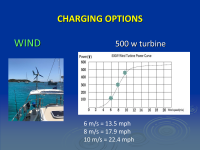
By contrast, a tradewind run with a wind turbine might yield just 80 amp-hours per day, because the apparent wind on a run is lighter. Good performance might see 40W output from 10 knots apparent. Similarly, solar panels only produce a fraction of their rated output for most of the day, so you’d need a large array to match the return of a modern hydrogenerator.
A blend of all three will, of course, give the best outcome for different conditions at anchor and under way – but on passage, it’s hard to beat the benefits of a good hydrogenerator.
Morning. Has anyone ever experimented with hydrogeneration aboard a C-Dory for the purposes of charging a battery bank? My “only a couple minutes” searching online said anything being driven by a propeller will lose efficiency if using one of those systems (obviously, as it creates drag), but I’d probably be okay with that as the goal would be converting gasoline power to electrical power simultaneously with the alternator for “more bank for your buck” per hour using the outboard, and it would presumably be a minimal amount. More stuff to break than with solar panels, and a generator would work also, but it’s intriguing as a concept without knowing more.
From Yachting Monthly:
Everything you need to know about hydrogenerators - Yachting Monthly
Design developments have made hydrogenerators the most efficient form of sustainable auxiliary energy for yachts. Sam Fortescue reviews the latest
www.yachtingmonthly.com
‘Kinetic energy increases proportionally to the cube of the velocity,’ adds Andersen. ‘That means producing 300 amp-hours per day or more is a realistic prospect while cruising at 7-8 knots with a hydrogenerator fitted. And it’s the reason why more and more boat owners are now opting for water generation, although it’s still not as popular as it should be.’
By contrast, a tradewind run with a wind turbine might yield just 80 amp-hours per day, because the apparent wind on a run is lighter. Good performance might see 40W output from 10 knots apparent. Similarly, solar panels only produce a fraction of their rated output for most of the day, so you’d need a large array to match the return of a modern hydrogenerator.
A blend of all three will, of course, give the best outcome for different conditions at anchor and under way – but on passage, it’s hard to beat the benefits of a good hydrogenerator.
Last edited:

 (note, I don't even have a fridge on my boat, ha)