Fuel tanks

Jondadi57

New member
Joined
Jul 16, 2026
Messages
7
Reaction score
2
Location
Fort Lauderdale
C Dory Year
1997
C Dory Model
22 Cruiser
Vessel Name
Sea Angel
I am wanting to put Yamaha's fuel management gauges on my Dory. Unfortunately, my tanks do not have fuel sending units. Is this the norm with C-Dory fuel tanks. I haven't pulled the tanks yet, so I don't know if they will accept a fuel sending unit. Any thoughts or experience with this?
 
The tanks in the 22’s are normally translucent plastic, and you can directly observe the fuel level in the tank. Sometimes I have had other put a bright flashlight on the side to see the level. You can also “sound” the level by tapping.
 
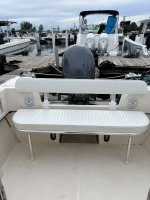
My point is that I want to track GPH & MPG for an extended trip. I also installed a fold down seat that obstructs the view of the tanks. I need to know if the tanks will accommodate a sending unit....
 

Attachments

  • IMG_8868 (2).jpg
    IMG_8868 (2).jpg
    3.2 MB · Views: 7
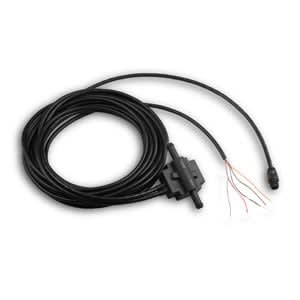
You can put a flow meter inline with the feed to the engine to get FF and MPG (if you have a suitable GPS). If you have a multifunction plotter you can display the info there or on a separate display.
Be aware that a low rpms, modern FI engines will only show FF intermittently when the low pressure fuel pump on the engine cycles.
You can pull the tanks and add fuel level sensors if you like.
 
The FFM will give you your GPH and MPG, it should also give you your total fuel burn and if you add total fuel on board, it will give you your fuel remaining. You need to manually enter it when you add fuel and every once in a while top off and reset your total fuel on board. Adding a fuel sending unit will give you your fuel level on a separate gauge, I might be wrong but I don’t think that the fuel level reading is taking into consideration for computing any of the numbers that you are looking for.
Hope this help
 
I had the Garmin or Lowrence fuel flow meters in line to the single engine. If you have twin engines, then it is slightly more complicated. Separate guage for fuel flow, fuel used, fuel remaining. As ssobol notes at idle the fuel flow is not accurate.

If you want miles per gallon, with no instrumentation, use the trip indicator on your GPS, and gallons put in the tanks, fill up to fill up. For instantanious results, then only the flow meter will work.
 
Most outboard makers began making digital plugs for your N2K ‘backbone’ for boat digital sensors after 2006 or so. If you don’t have one, you can install it for $67. I hooked up twin Lowrance adapters ($110 each) to the Yamaha plug under the cowling for my 2010 F150’s. Not all lower HP motors had that plug. Also, Yamaha insisted on using only their $900 Gateway and $200 pigtails and it still didn’t include fuel flow. For that I plumbed in two Garmin GFS110 onto the N2K backbone to Garmin MFDs. That requires cutting the gas lines, but if I can do it any idiot can.


It all worked fine, but we repowered to 2024 all digital Helmsman Group 2 motors, which is a more elegant solution, but pricey at $55,000. All the data you want is on the Yamaha CL5 gauge. I suspect that if you installed fuel level sensors (a simple rheostat, pink wire) you could only plug it into an analog fuel gauge.

Try to stick with ONLY your MFD brand of plotter for connections that are more likely to work, but be prepared for disappointment even then. Really old plotters use 13 multicolored wires (prior to the round, 5 pin N2K).

Having all this expensive tech has taught us one very important concept: We really don’t need it! At 22-26 MPH we’ll be burning 13-14 GPH in Heavy Cruise Mode (with a half tank (500 pounds) of gas all day long. Consider getting lots of hours before leaping into this, and get a 5 gallon extra tank (but replace the new stupid fill sprouts with the old type) if you’re nervous about running out of gas.

Hope something here is helpful…Safe Travels!
John

 
Yeah, newer engines often have a network connection to add engine information to a NMEA 2000 network. Depends on the engine year, model, and manufacturer. Mid Hp range Hondas didn't get this until about 2016 or so.
 
Back
Top